




Echocardiogram for Pets in El Paso, TX
A complete and compassionate cardiac evaluation for your pet.
Request An Appointment
Advanced Imaging Referral Form
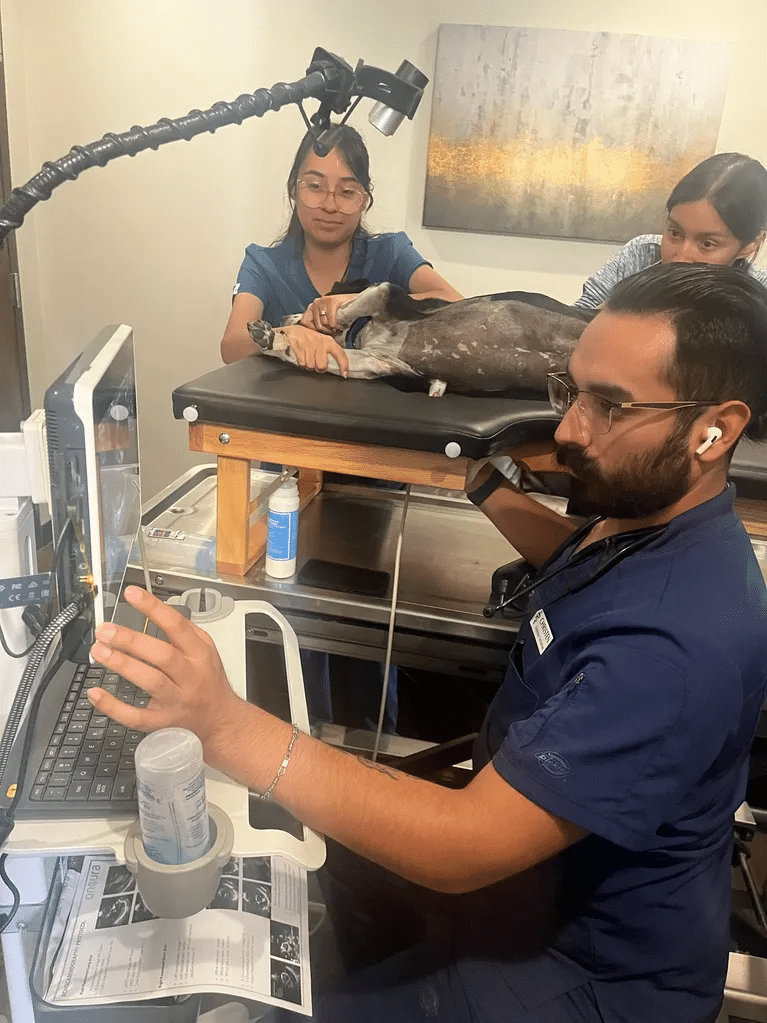
Veterinary Echocardiograms for Dogs & Cats in El Paso, TX

What Is an Echocardiogram for Pets?
An echocardiogram is a non-invasive, ultrasound-based heart exam that allows your veterinarian to evaluate your pet’s heart structure, blood flow, and overall cardiac function. At TLC Animal Hospital in El Paso, this advanced imaging tool helps diagnose heart conditions early and accurately, giving your pet the best chance at a long and healthy life.
Signs Your Pet May Need an Echocardiogram
Heart disease can be subtle in early stages. Your pet may benefit from a cardiac evaluation if they are experiencing:
Common Symptoms of Heart Problems
• Persistent coughing
• Difficulty breathing
• Fainting or collapsing
• Decreased stamina or fatigue
• Reduced ability to exercise
• Loss of appetite or weight loss
• Behavioral changes
• Rear-limb weakness
• Rapid or labored breathing at rest
Some pets show no symptoms at all, making early detection especially important.
How an Echocardiogram Works
During this procedure, your pet rests comfortably on a padded table while our veterinarian gently moves a handheld ultrasound probe across the chest. The probe emits sound waves that create real-time images of the heart, allowing us to:
• Evaluate heart chamber size
• Assess blood flow
• Detect abnormal rhythms
• Identify valve leakage
• Spot growths, masses, or heartworm complications
• Measure heart muscle thickness
Most pets remain calm, and sedation is rarely needed unless your pet is extremely anxious.
Conditions an Echocardiogram Can Detect
Echocardiography is essential in diagnosing several types of heart disease, including:
Common Cardiac Conditions
• Chronic Valvular Disease – Valve abnormalities that affect blood flow
• Dilated Cardiomyopathy (DCM) – Heart muscle dilation
• Hypertrophic Cardiomyopathy (HCM) – Thickening of the heart muscle
• Patent Ductus Arteriosus (PDA) – A congenital heart condition
• Heart Tumors
• Heartworm-related damage
• Congenital heart defects
Early diagnosis allows for better treatment options and often improves your pet’s long-term prognosis.
Why Early Detection Matters
Heart disease often progresses silently. Detecting changes early gives your veterinarian the ability to:
• Start treatment sooner
• Slow disease progression
• Reduce symptoms
• Improve comfort and quality of life
• Extend your pet’s lifespan
Your veterinarian will determine whether an echocardiogram is recommended after a full physical exam and review of symptoms.
How It Works

Schedule an Appointment
Call us at (915) 592-6200 to schedule your pet’s cardiac evaluation. We’ll ask a few questions about your pet’s symptoms, medical history, and any changes you may have noticed so we can prepare for their visit.

Comprehensive Heart Examination
During your appointment, our veterinary team performs a thorough cardiac assessment, including listening to the heart, reviewing symptoms, and determining whether an echocardiogram is recommended. If needed, we may also suggest diagnostic tests to rule out underlying conditions.

Personalized Treatment Plan
Based on your pet’s diagnosis and overall heart health, we create a customized treatment plan, which may include medications, lifestyle adjustments, monitoring schedules, or referral recommendations for advanced cardiology care. Our goal is to help your pet maintain a healthy, comfortable life.
Our Location
Frequently Asked Questions
Is an echocardiogram painful for my pet?
No. An echocardiogram is gentle, painless, and non-invasive.
How long does the procedure take?
Most exams take 20–30 minutes, depending on your pet’s comfort and what the veterinarian is evaluating.
Will my pet need to be shaved?
In most cases, a small patch of fur is shaved to ensure clear imaging.
Does my pet need sedation?
Sedation is rarely required unless the pet is extremely anxious or unable to stay still.