


Service
Pet Dental Care in El Paso, TX
Healthy teeth and gums do more than freshen breath. Professional veterinary dentistry prevents pain, infection, and tooth loss, and it protects overall health. At TLC Animal Hospital in El Paso, our AAHA accredited, Fear Free Certified team provides complete dental care for dogs and cats, including thorough oral exams, digital dental X-rays, ultrasonic cleanings, polishing, and extractions when needed. Every patient receives an individualized anesthesia and pain management plan for safe, comfortable care.
Request An Appointment


Why Regular Pet Dental Care Matters
Plaque hardens into tartar, pushing bacteria under the gumline where it damages tissues and can enter the bloodstream. This can affect the heart, liver, and kidneys if not addressed. Routine dental care reduces disease risk, helps pets eat comfortably, and supports a longer, healthier life.
Key benefits:
What To Expect During a Professional Dental Visit
Pre-anesthetic exam and planning
Your veterinarian performs a full physical exam and reviews medical history. Pre-anesthetic bloodwork and other screening are recommended based on age and health. You receive a written treatment plan and estimate before the procedure.
Digital dental X-rays
Full-mouth digital X-rays identify issues not visible during an oral exam, such as root infections, resorptive lesions, retained roots, and bone loss. This allows precise, targeted treatment.
Extractions and therapy when indicated
If a tooth is non-viable or painful, your veterinarian may recommend extraction. Local nerve blocks, analgesics, and antibiotics are used as appropriate to keep your pet comfortable during recovery.
General anesthesia and patient monitoring
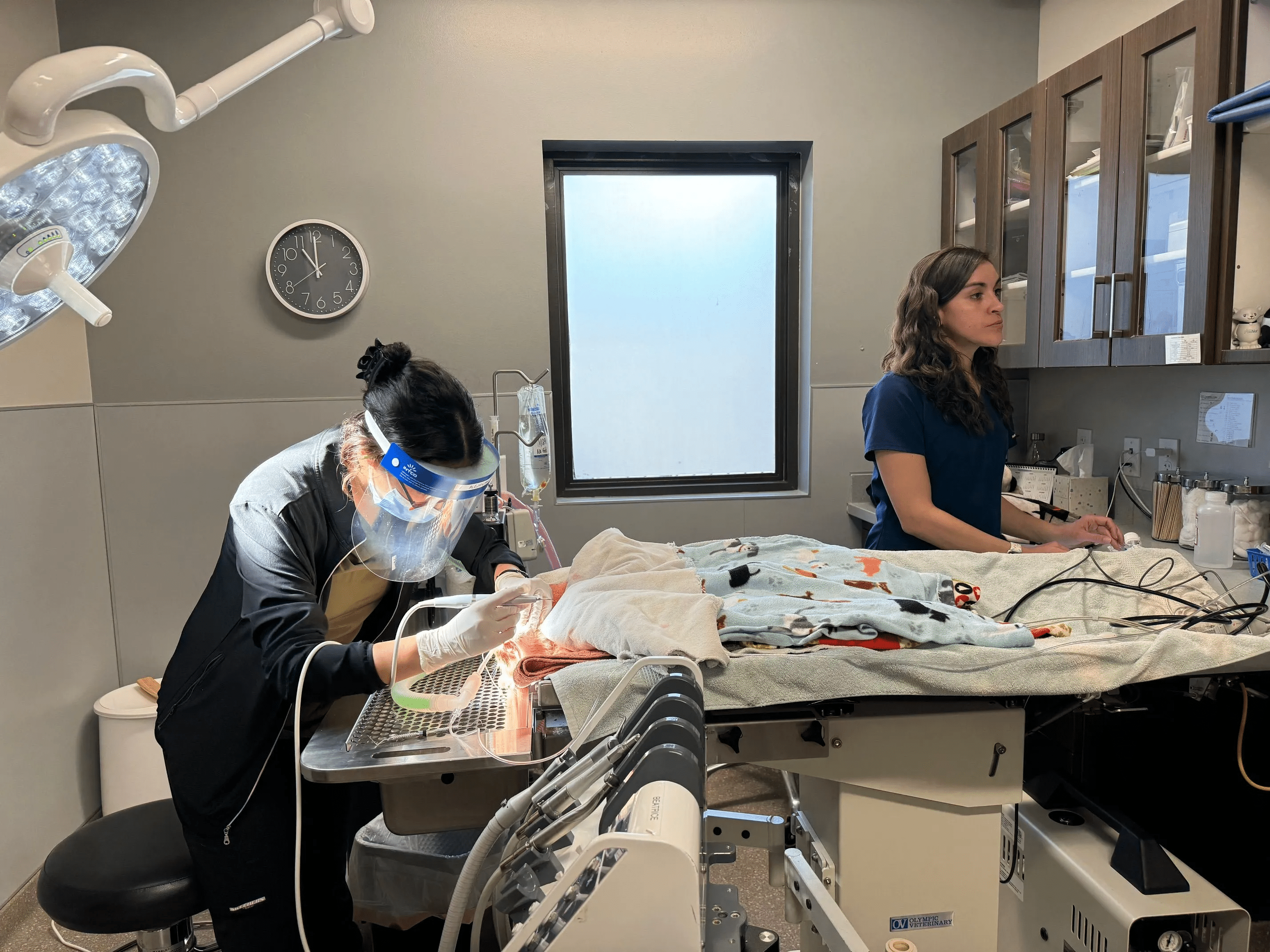
Dental care requires general anesthesia to allow a thorough, pain-free cleaning and evaluation below the gumline. We place an IV catheter, provide fluids, maintain temperature support, and continuously monitor ECG, blood pressure, CO₂, and oxygen saturation.
Ultrasonic scaling and polishing
We remove plaque and tartar above and below the gumline, then polish teeth to smooth enamel and slow future buildup.
Discharge and home care plan
You receive clear home care instructions, pain control guidance, and a recheck schedule. Our team demonstrates simple brushing techniques and suggests VOHC accepted products that fit your pet’s needs.

Common Signs of Dental Disease
If you notice any of the signs below, schedule a dental exam. Early treatment is simpler and more comfortable for your pet.
Bad breath and oral changes
-
Persistent bad breath
-
Yellow or brown tartar
-
Red, swollen, or bleeding gums
-
Loose, fractured, or missing teeth
Eating and behavior changes
-
Dropping food or chewing on one side
-
Pawing at the mouth or face
-
Reluctance to eat kibble or hard treats
-
Swelling under the eye or along the jaw
Call us at : (951)592-6200
Check out the team in action!

Frequently Asked Questions
How often should my pet have a dental cleaning
Most pets benefit from annual dental exams and cleanings. Small breed dogs and flat-faced breeds may need more frequent care due to crowding and faster tartar buildup.
Is anesthesia required for dental cleanings
Yes. A complete evaluation and cleaning below the gumline are not possible without general anesthesia. This keeps pets safe and allows thorough, pain-free treatment.
Do you take dental X-rays
Yes. Digital dental X-rays are taken during the procedure to identify issues under the gumline and guide treatment decisions.
What are the risks of not treating dental disease
Untreated periodontal disease causes pain, tooth loss, jaw bone loss, and infection. Bacteria can also affect the heart, liver, and kidneys over time.
Can I avoid extractions
Our goal is to save teeth when feasible. Severely damaged or painful teeth may require extraction to remove infection and restore comfort. X-rays help determine the best plan.
How do I start brushing my pet’s teeth
Use a soft veterinary toothbrush and pet-safe toothpaste. Start with short sessions and praise. Your care team can demonstrate a simple routine and suggest products.
How long does a dental procedure take
Time varies based on disease severity, number of X-ray views, and whether extractions are needed. Your veterinarian will review timing on the day of the procedure.